
Welcome to the Laboratory of Ecological Systems
The research of the laboratory ECOS was centred on the organisation, functioning and dynamics of terrestrial plant, animal and microbial communities in relation to ecosystem processes and habitats.
You can find more information on the personal web page of Prof. A. Buttler.
>>> https://people.epfl.ch/alexandre.buttler
ECOS resulted from a joint-venture, with a joint-professorship, between the EPFL and the Federal Research Institute WSL.
|
|
 |

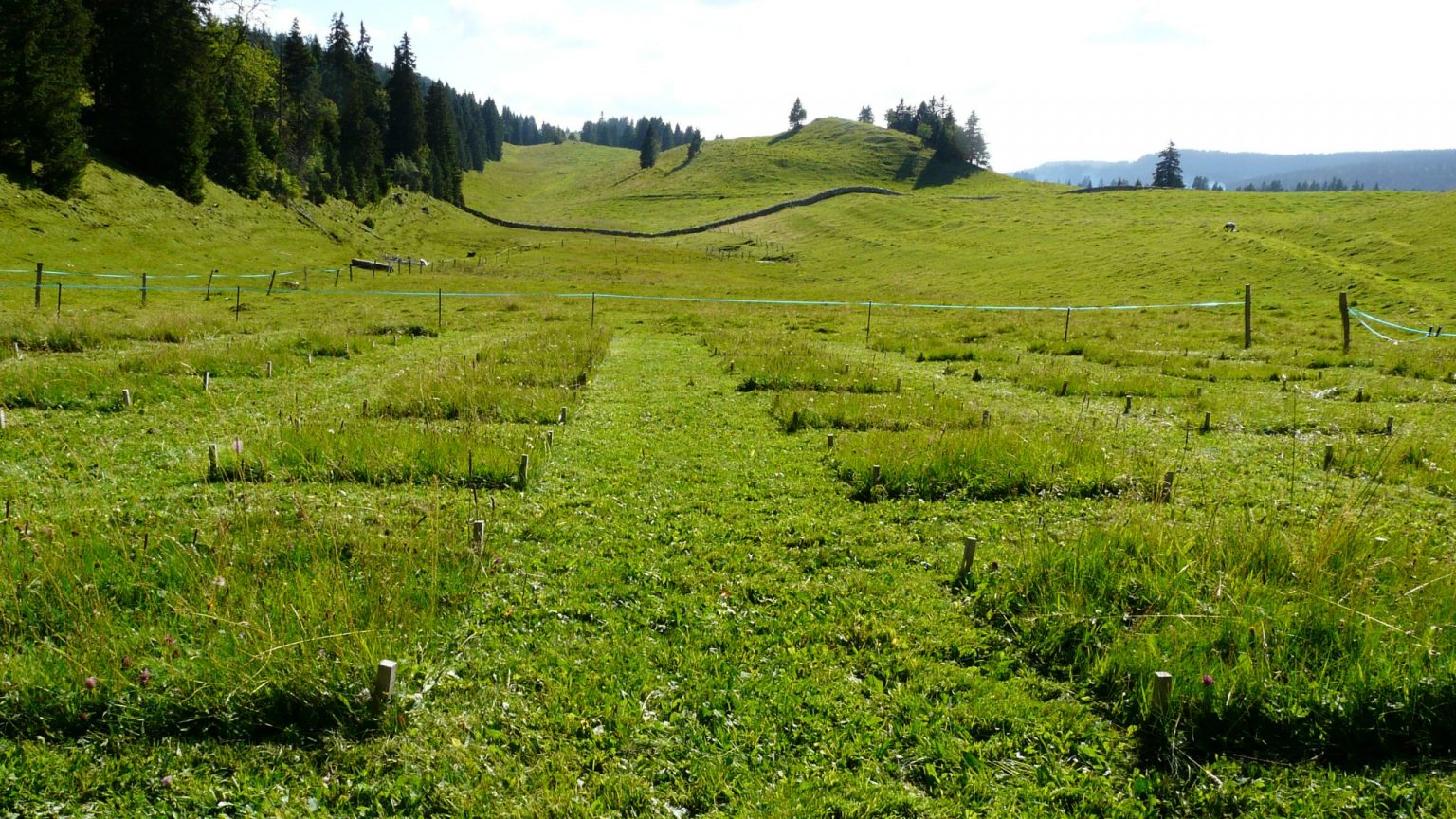
The research of the laboratory ECOS was centred on the organization, functioning and dynamics of terrestrial plant, animal and microbial communities in relation to ecosystem processes. We studied spatial and temporal dynamics of natural ecosystems, impact of management and direct and indirect human impacts (e.g. climate change, land-use change, invasion by alien species, atmospheric depositions, etc.), and ecological resilience and restoration.
One of our strength was the functional link between above and belowground communities in the production of critical ecosystem services and as indicators of a changing environment. We combined descriptive field studies, manipulative experiments in the field and in the lab, and ecological modelling (correlative and predictive). Model ecosystems were natural and semi-natural man-used sensitive and altered terrestrial ecosystems (peatlands, sylvopastoral and grasslands systems, floodplains).
Our scientific inputs allowed to provide science-based guidelines for conservation, restoration and management of natural and semi-natural sensitive terrestrial ecosystems.
You want to know more about us? Take a look at this presentation and for any further question you still can contact Prof. Alexandre Buttler ([email protected])
Cheers,
Professeur Alexandre Buttler
Our research in action
This short film below, realised by two students of the University of Art and Design Lausanne, presents in few minutes the daily work at ECOS laboratory:
And here, you can fly with us above the EPFL campus and the laboratory ECOS: an overview from the sky…